MyInvois at the till
Every receipt can become a validated e-invoice on request, consolidated B2C invoices are submitted on schedule, and rejections are queued for finance with the deadline showing.
asasiicommerce
asasii Commerce runs the tills at the counter, the outlet behind them, the catalogue and prices across every channel, the warehouse and the online store. One product record, one stock position, one takings figure, whether the sale happened at a terminal, on the storefront or on a marketplace. Owned outright by the retailer, deployed in its own environment, customised to its channels and its catalogue, maintained by idataraya under one agreement.
The same product, price and stock position at the till, on the storefront and on the marketplace. The sale posts once, the stock moves once, the takings reconcile once.
Head office keeps products, variants, bundles, media and price books in one place and decides which channel sells what. An outlet-only line never leaks online; a web exclusive never confuses a till.
The asasii POS terminal takes cards, QR and cash, prints or sends the receipt with the e-invoice, and keeps selling through a network drop. Held receipts sync when the line returns.
Opening and closing, shifts and takings, returns and exchanges, click and collect, layaway, gift cards, stock counts, labels and terminals, on one console for the outlet manager.
Orders from every channel land in one queue, allocated to the outlet or warehouse that can ship soonest. Picking, packing, carriers, returns, replenishment and purchase orders follow the stock.
Takings from every till, settlements from every gateway and marketplace, bank reconciliation, e-invoices and supplier payments, on a period that closes and exports to the ledger.
The statutory and payment pieces are in the platform, at the till and in the back office.
Every receipt can become a validated e-invoice on request, consolidated B2C invoices are submitted on schedule, and rejections are queued for finance with the deadline showing.
Cards, DuitNow QR, e-wallets and cash at the terminal; FPX, cards and wallets online. Settlement is matched per gateway and per day, and a late gateway is flagged, not discovered.
Listings, prices and stock pushed to the marketplaces the retailer sells on, orders pulled back into the same fulfilment queue, fees reconciled against settlement.
Tax per line at the till and online, SST returns from the same data, and the reports a group or a ministry client asks for, generated from the platform rather than assembled by hand.
The outlet, head office merchandising, operations, finance, the customer on the storefront, the platform team and the group each get a console built for what they decide.
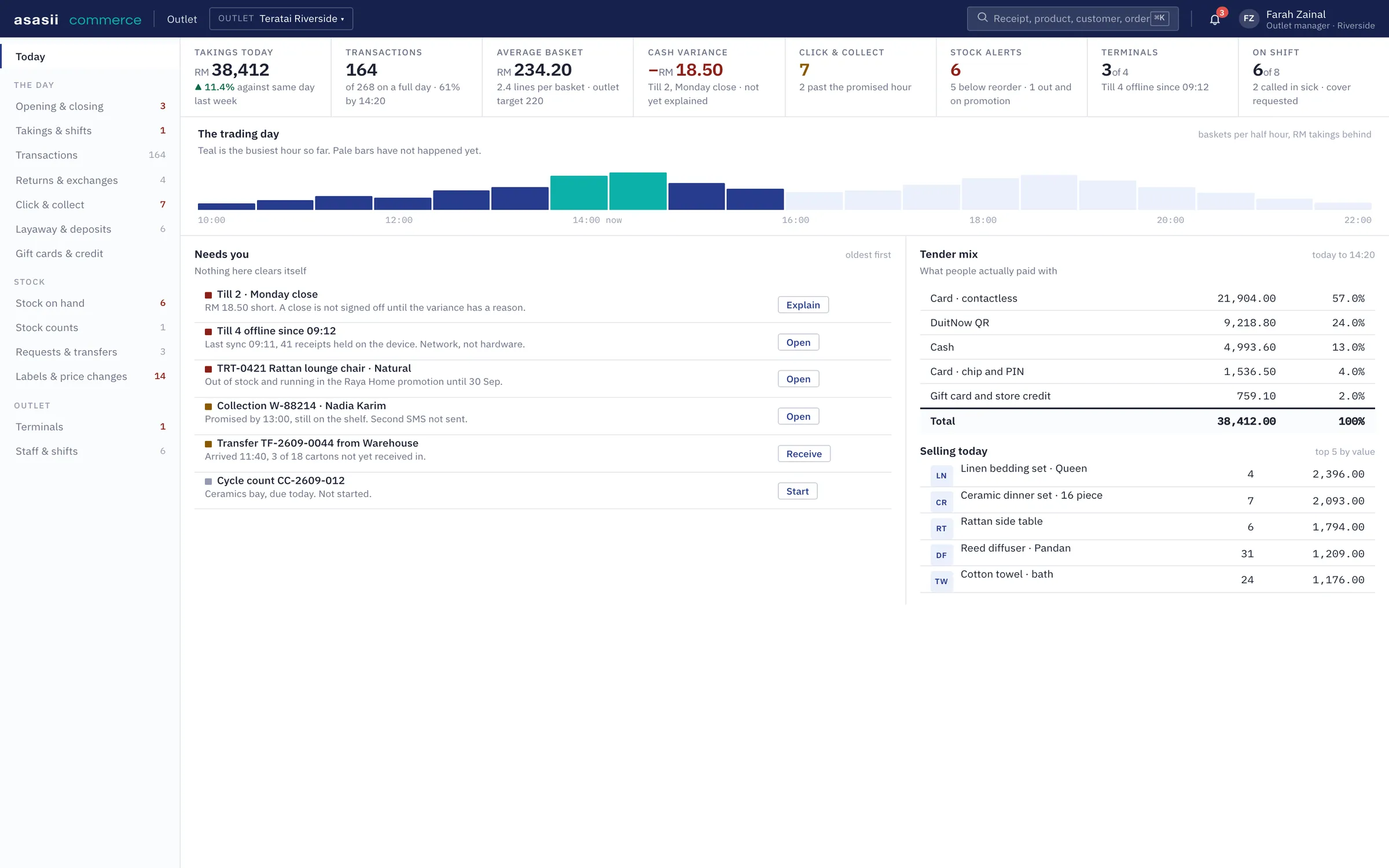
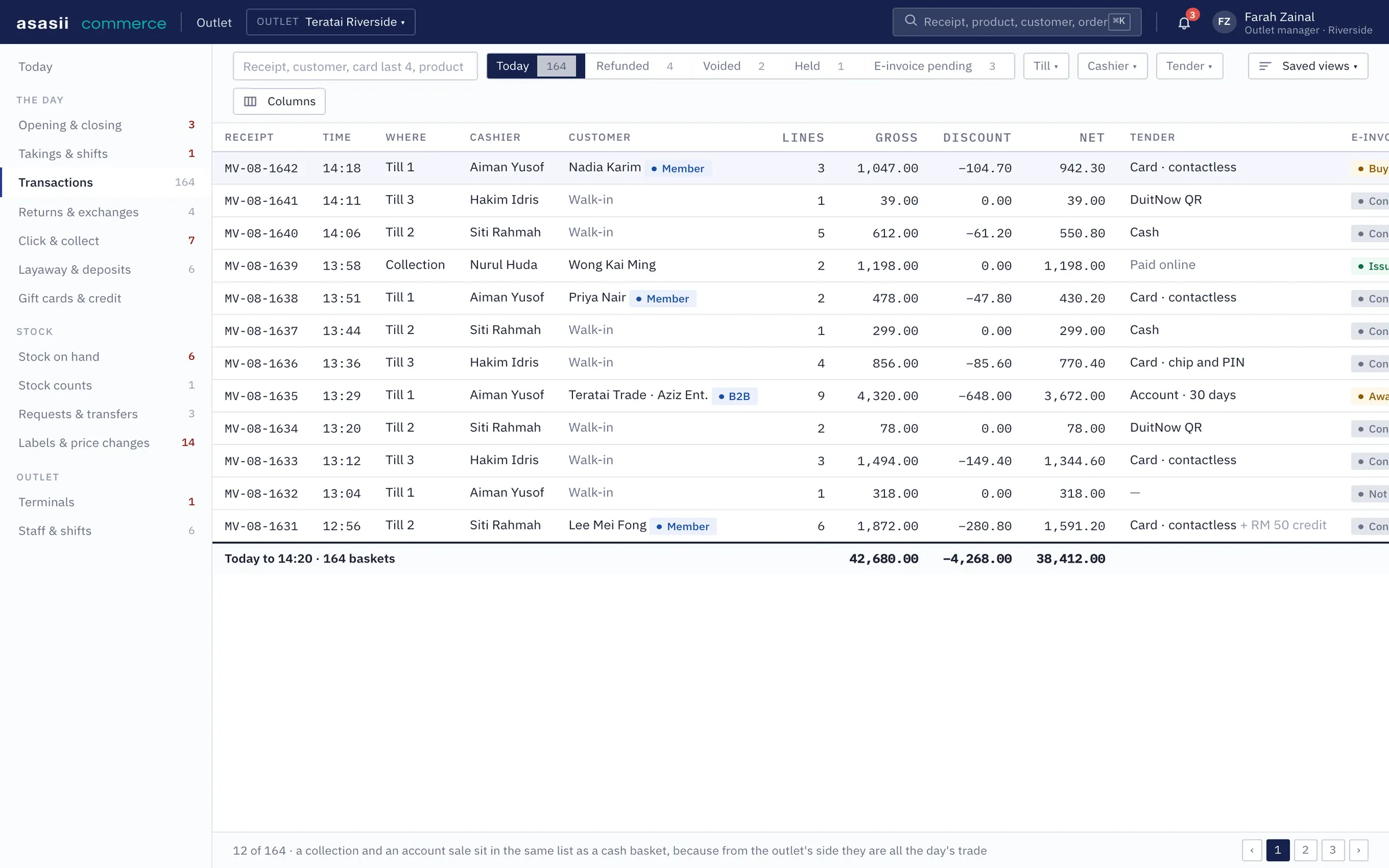
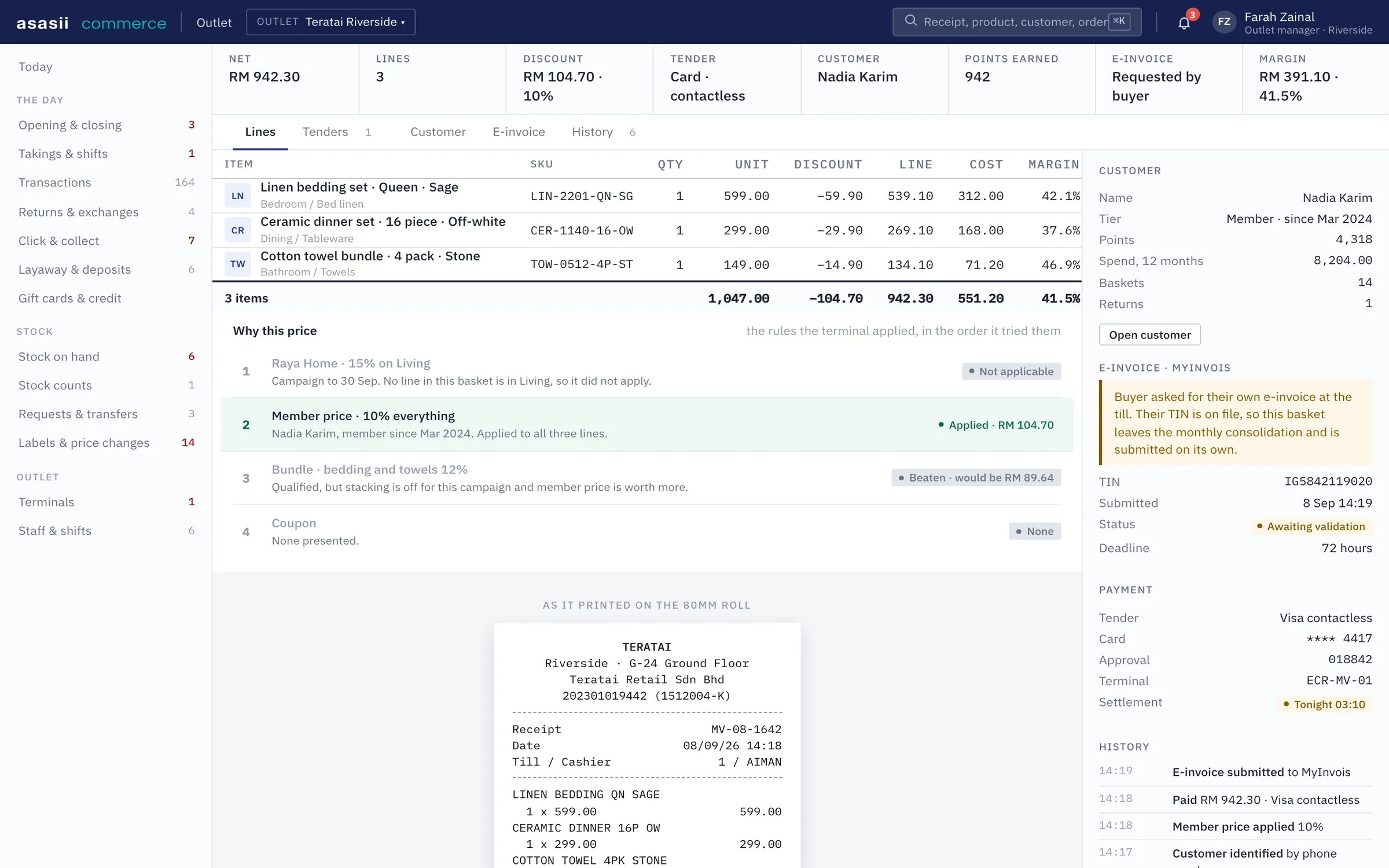
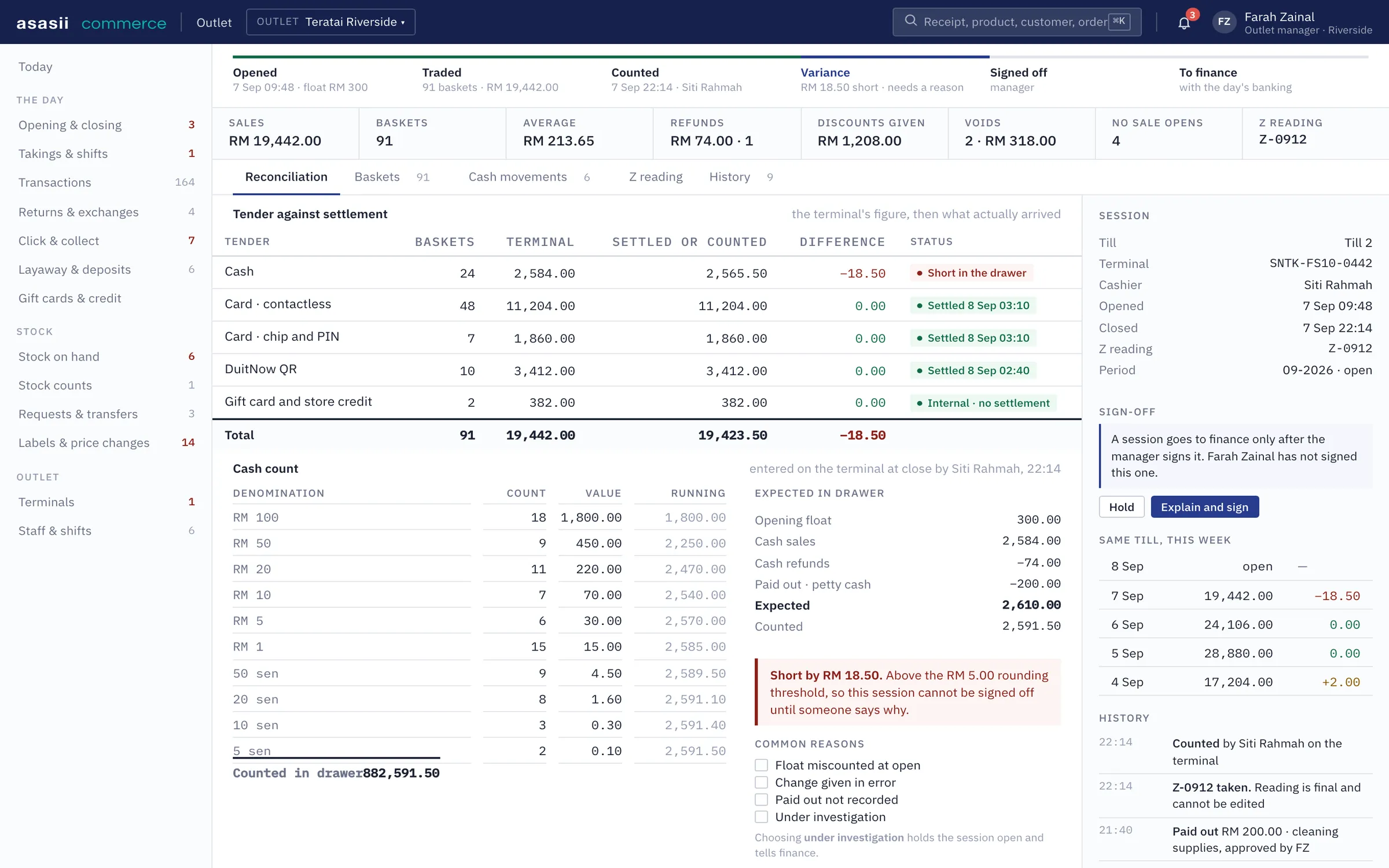
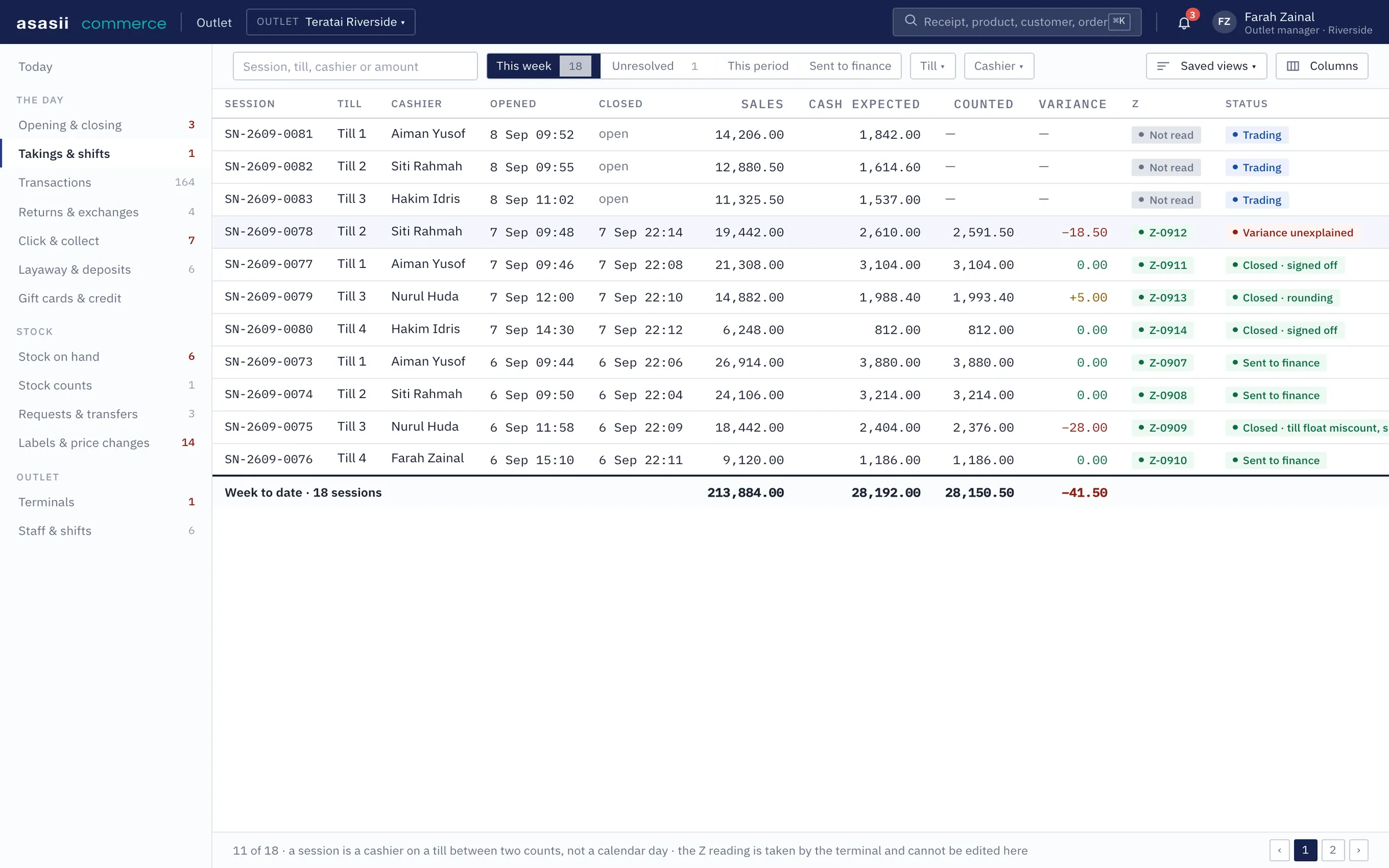
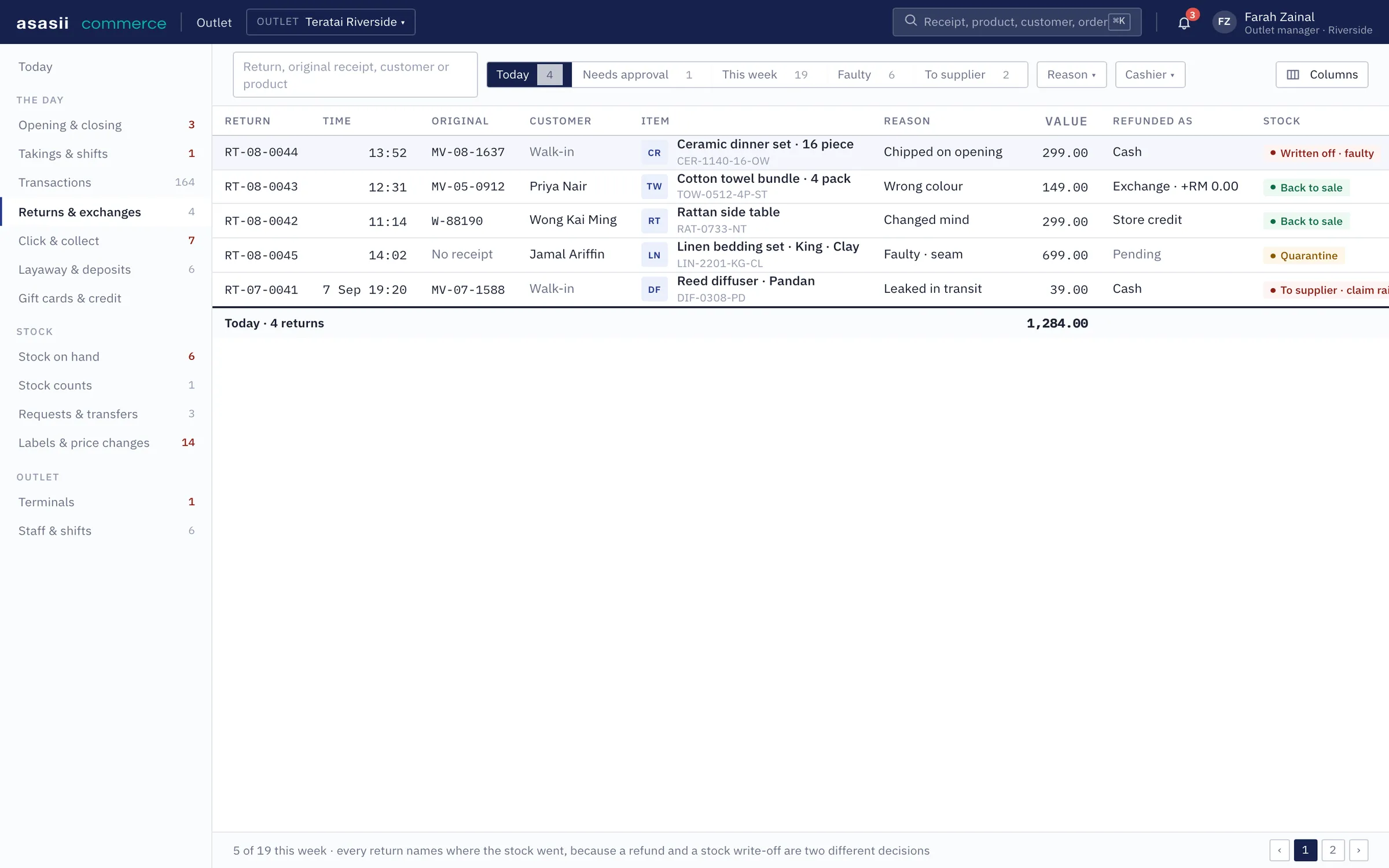
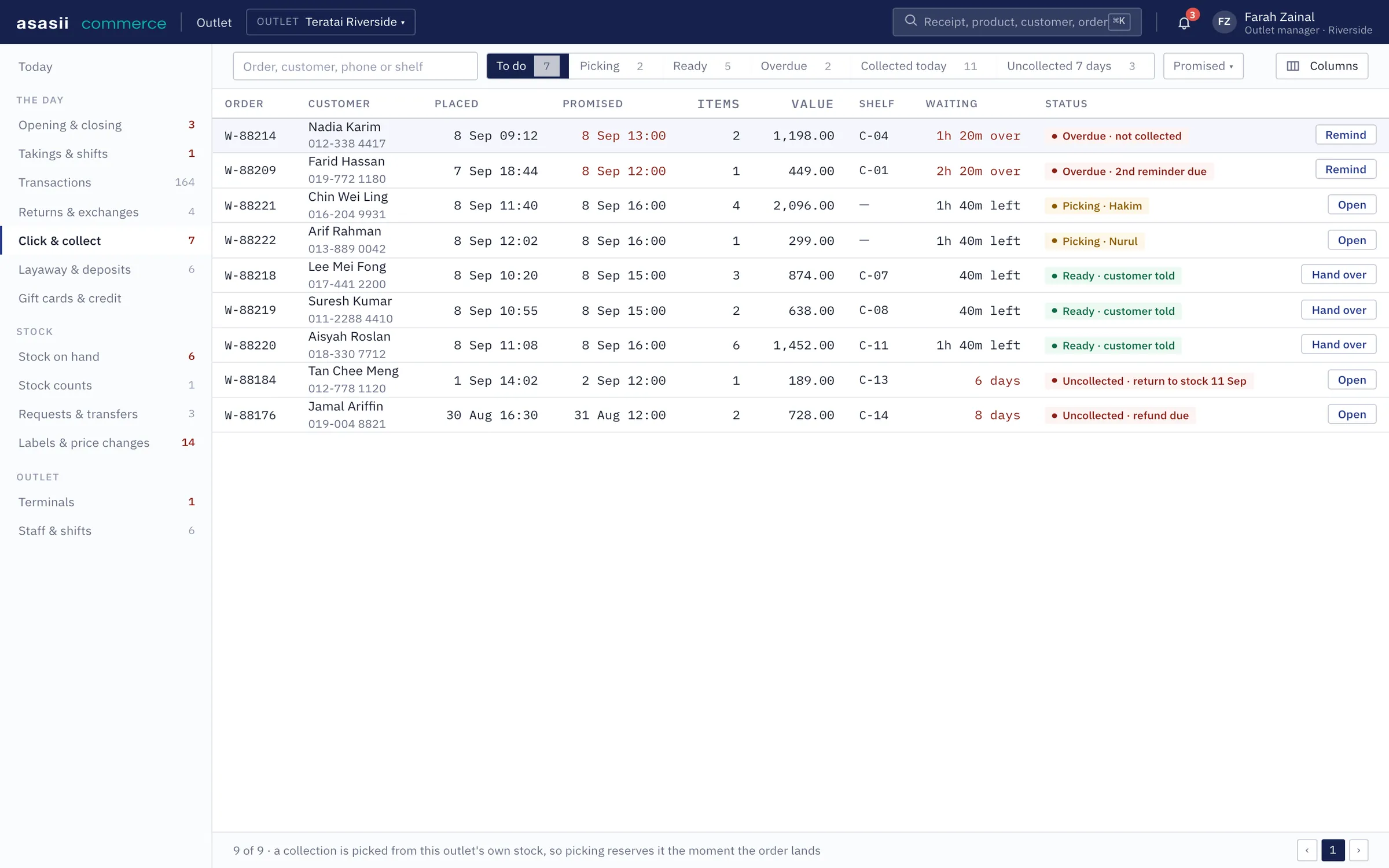
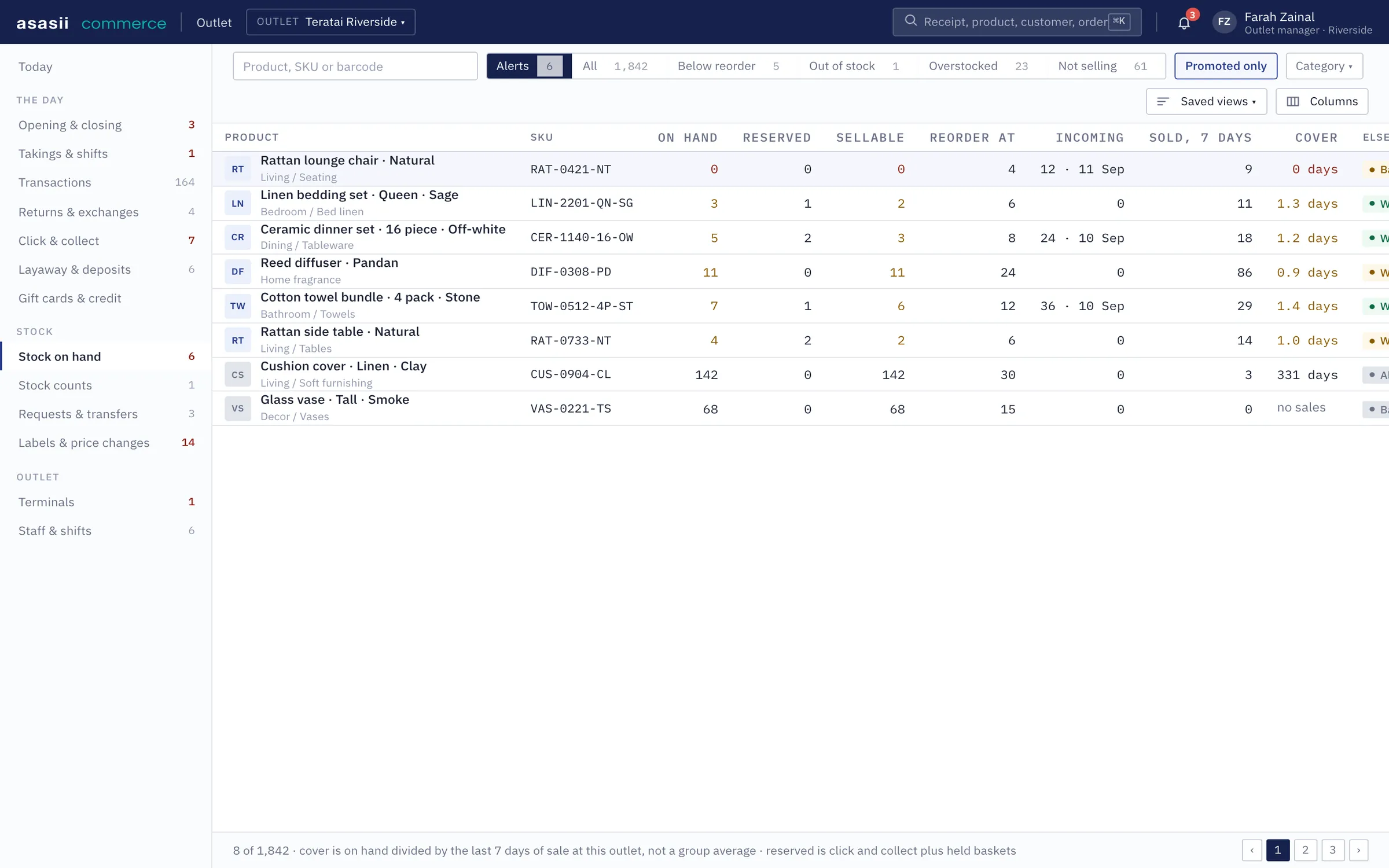
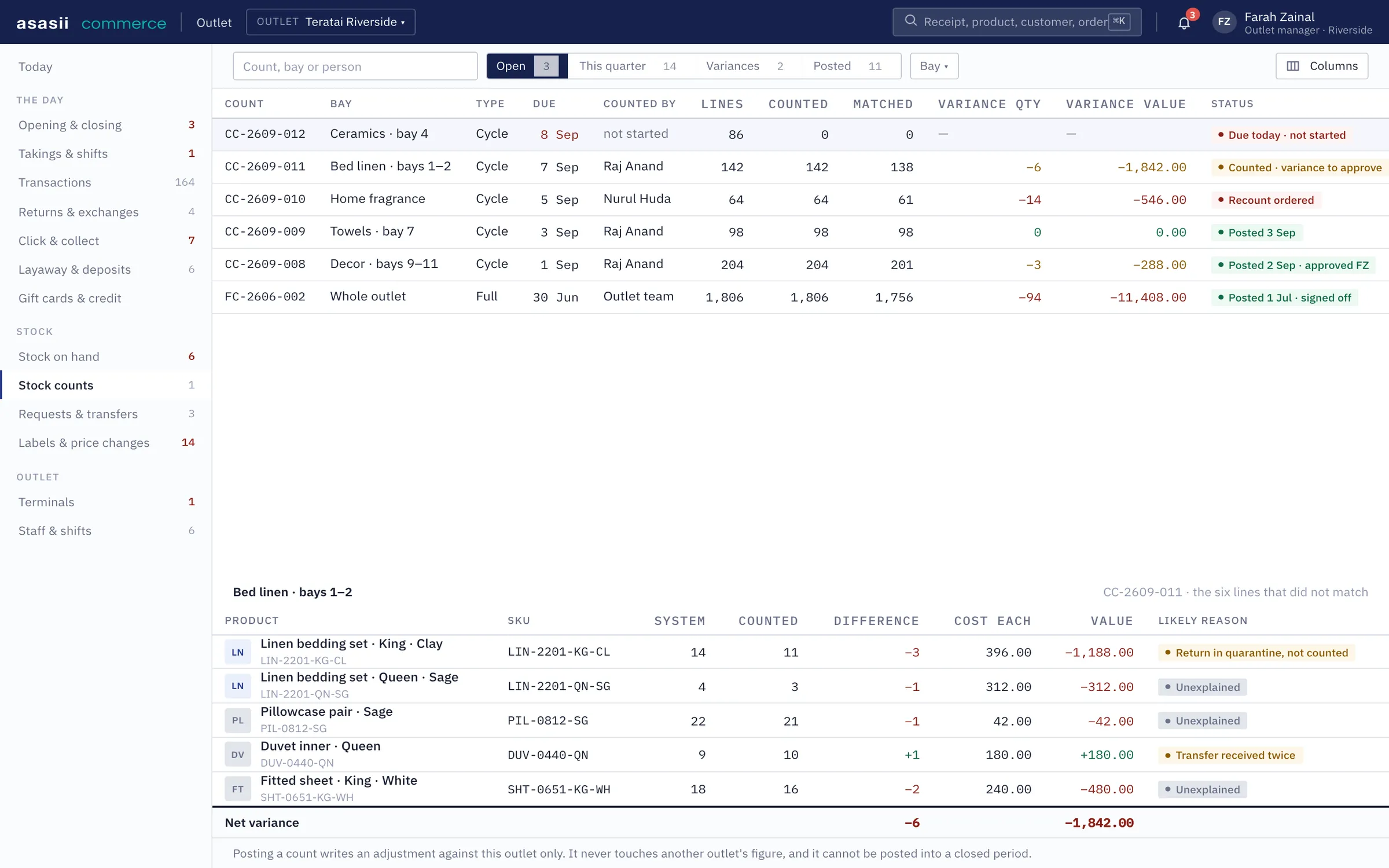
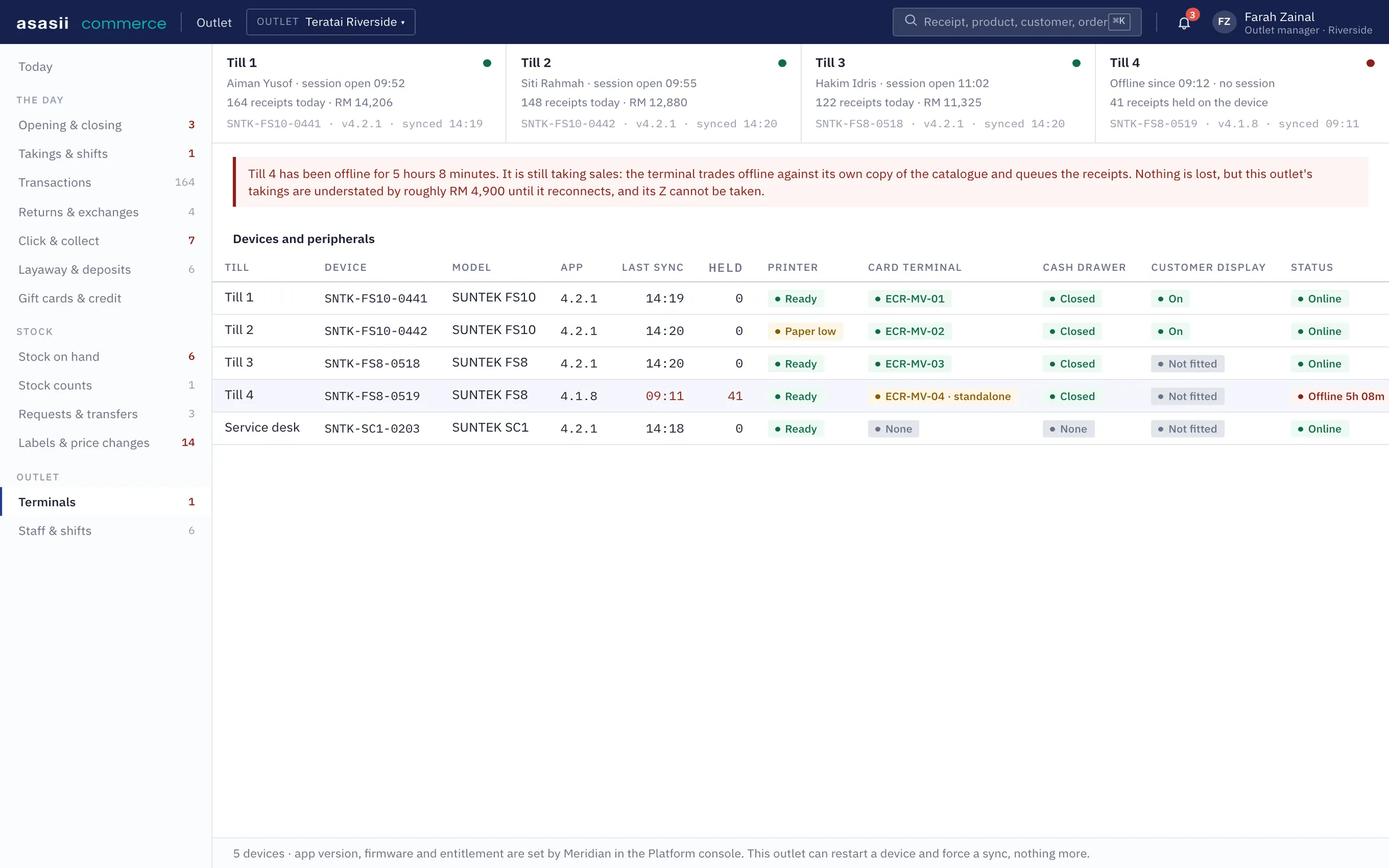
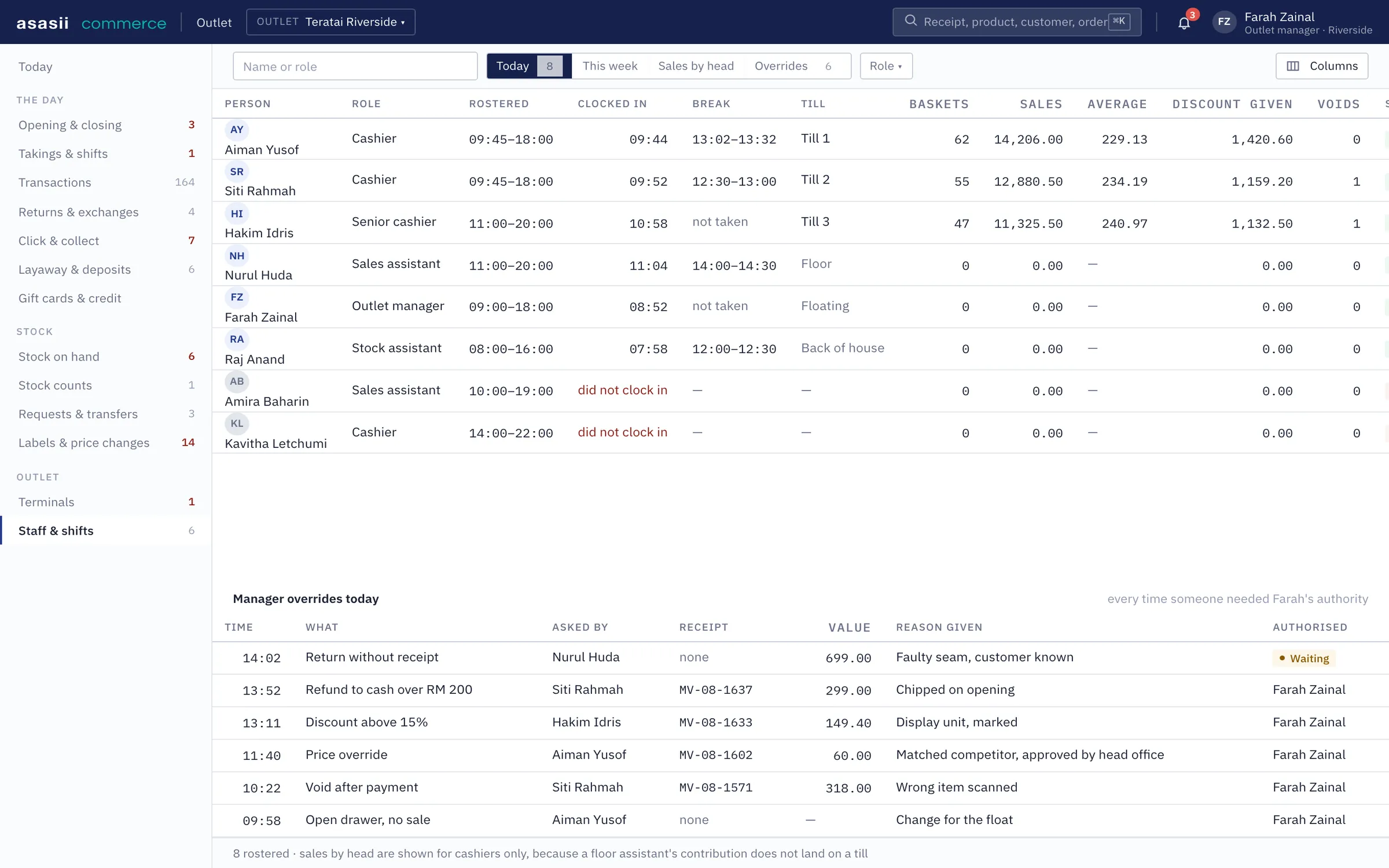
A terminal at the counter, a console for every team, and one platform underneath, owned by the retailer, deployed in its own environment and maintained by idataraya.
An Android point-of-sale terminal with printer and card reader, running the asasii POS app. Managed from the platform: version, configuration, offline queue and health per device.
The terminal holds the catalogue and prices locally, takes sales through a network drop and syncs receipts, stock and e-invoices when the line returns.
Consoles and storefront run in the retailer's own cloud account or data centre. idataraya installs them, hardens them and keeps them current; the retailer holds the keys, the backups and the data.
Payment gateways, marketplaces, carriers and MyInvois are connected once. The ledger export feeds asasii Ledger or the retailer's own accounting, and a documented API gives the retailer's other systems and third parties access to products, stock, orders and takings.
Enterprise-grade security throughout, built for the questions a retail group's audit committee and its IT office will ask.
Single sign-on for head office, roles by console and outlet, till permissions per cashier, and MFA for anything that changes a price or a payout.
Every price change, promotion, void, refund, stock adjustment and payout is recorded with who, when and the previous value, retained for seven years.
Card data stays on the acquirer's reader and gateway. The platform holds tokens and settlement references, which keeps the retailer's PCI scope where it already is.
Customer accounts, orders and loyalty under the Personal Data Protection Act 2010, held in the retailer's own environment, with retention per data class and export on request.
One annual agreement covers the software, its customisation, the terminals, the monitoring and the people who answer. Hosting stays with the retailer.
Severity-based response and restoration targets, measured and reported monthly. A till that cannot sell or a gateway that has not paid is a priority one.
Spare terminals held for the chain, swaps within the agreed window, and firmware and app updates rolled out by outlet from the platform.
Terminals, gateways, marketplaces, carriers and MyInvois are watched continuously from within the retailer's environment, with alerts to its team and to idataraya.
A new outlet is a configuration, a delivery of terminals and an afternoon on site. The catalogue, prices and staff roles arrive with it.
A licence and an agreement, not a percentage of every sale and not a storefront that belongs to someone else.
The retailer owns the software outright, with every record and the customisations made for it. Products, customers, orders, receipts and the audit trail export in full, in standard formats.
The online store runs under the retailer's domain and brand. Customers register with the retailer, not with a marketplace, and their data stays with the retailer.
Software, customisation, terminals, monitoring, statutory updates and support under one agreement with defined response times. Hosting is the retailer's own.
Takings and settlements post into asasii Ledger, purchase orders and supplier invoices flow through asasii Procure, and the group console reads every client side by side.
Send us the outlet list, the terminal count and the channels you sell on. We come back with a rollout plan, a terminal list and a proposal.
Request a proposal